
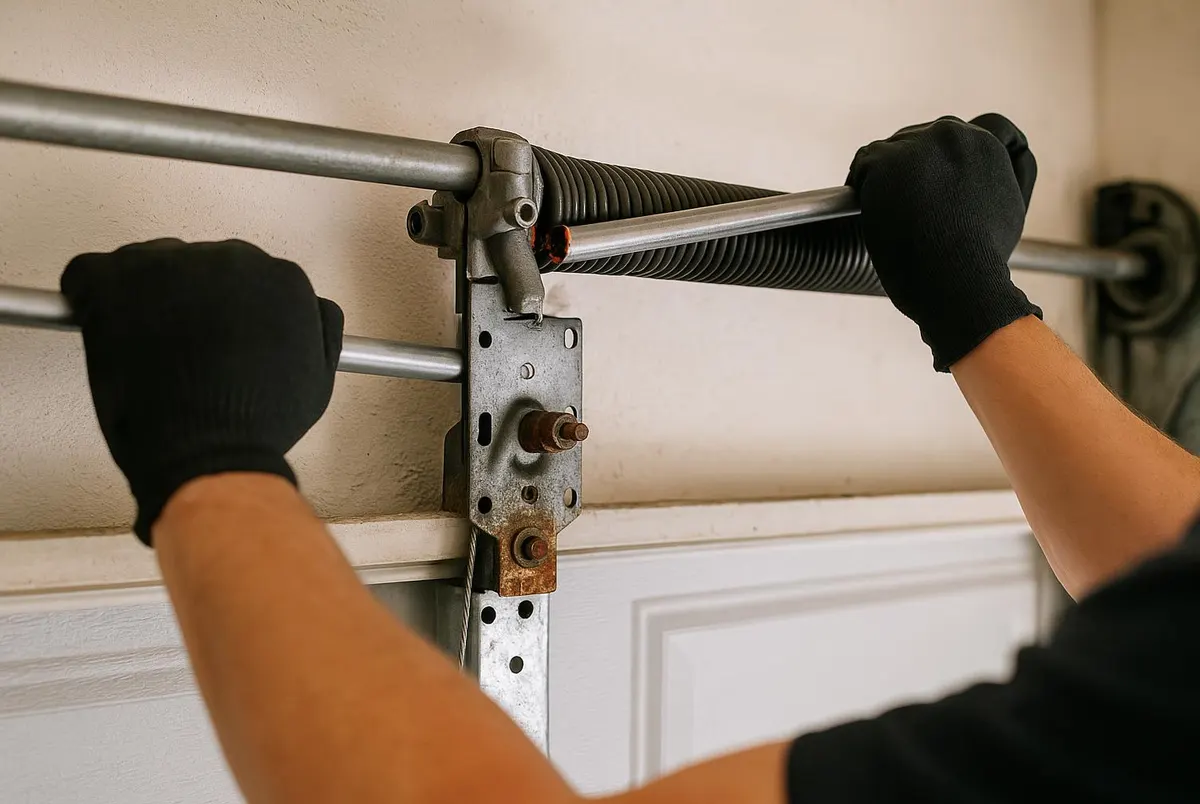
What a Technician Sees on a Typical Call
The call usually starts the same way: "It made this huge bang and now it won't move." The homeowner is convinced something just broke. Nine times out of ten, something had been breaking for months — they just didn't know where to look. A technician pulls up, opens the garage, and within thirty seconds spots a cable frayed down to three strands, or a roller worn into an oval shape with a chunk missing from the edge. The dramatic failure was the finale. The real story was written weeks earlier in parts nobody checks.
Cables and Rollers: The Parts That Do the Quiet Work
Your garage door springs get all the attention because everyone's heard a spring horror story. But springs don't lift the door by themselves. Two steel cables run from the bottom brackets up to the drum near the spring, and they're what actually transfers the spring's force into lifting the door. Rollers are the small wheels riding in the track that let the door glide instead of grind.
Neither part is glamorous. Neither gets mentioned in most garage door conversations. And that's exactly why they fail without warning — nobody's watching them.
How Cables Fray
Cables wear from the inside out. Each time the door cycles, the cable flexes around the drum and the bottom bracket. Over thousands of cycles, individual strands snap. You might see small hairlike wires sticking out near the bottom bracket, or notice the cable looks "fuzzy" instead of smooth. Rust accelerates this badly — and in this part of Florida, with humid air, afternoon downpours, and salt air if you're closer to the coast, moisture gets into those steel strands faster than it would in a dry climate. A cable that would last years in a dry garage can fray noticeably sooner here.
How Rollers Wear
Rollers take a beating every single cycle, especially the ones nearest the bottom of the door that handle the most weight transfer as the door starts moving. Nylon rollers (the quieter, more common kind now) develop flat spots or cracks. Steel rollers with bearings seize up or wear down unevenly. Humidity and temperature swings make the garage door's wood or composite panels expand slightly, which can throw off track alignment just enough to grind a roller edge faster than normal.
The Symptoms That Mean Something, and What They Don't
- Grinding or rumbling that's gotten louder over months — almost always rollers. Not an emergency today, but don't ignore it.
- A rhythmic squeak once per cycle — usually a dry roller or hinge, often fixable with the right lubricant and five minutes.
- Visible frayed wire strands anywhere on a cable — this is urgent. A fraying cable under tension is unpredictable, and it can snap without warning.
- The door looking crooked or hanging unevenly — could be a stretched or slipping cable, or a roller that's jumped the track. Stop using the opener until it's checked.
- A loud bang followed by the door refusing to move — this is often a cable finally giving out, or occasionally a spring. Either way, it's a professional call, not a DIY afternoon.
Settling the Argument
Here's the honest answer for the couple debating whether this is "nothing" or "an emergency": worn rollers are a maintenance issue — real, worth fixing, but rarely dangerous. Frayed cables are a safety issue. A roller can wait a couple of weeks if you're busy. A fraying cable should not. The two often get lumped together in conversation, but they carry very different levels of urgency, and that's usually the actual disagreement underneath the argument about the noise.
Why This Matters More Here Than in Drier Climates
Houses around Clay County deal with a specific combination: high humidity most of the year, intense afternoon storms in the warmer months, and wind-load considerations for garage doors given hurricane season. That combination means more moisture cycling in and out of your garage, more rust creep on steel components, and more swelling and contracting of door panels and tracks. None of that causes cables and rollers to fail out of nowhere — but it does shorten the runway. A roller or cable that might give you a clear warning period in a milder, drier climate can go from "slightly worn" to "failed" faster here, especially if the garage sits in full sun for part of the day and gets a dose of humidity swings each afternoon.
When to Call Orange Park Garage Door
If you've spotted frayed strands on a cable, don't try to replace it yourself — cables under spring tension can cause serious injury if handled without the right tools and training. That's a job for Garage Door Cable Repair, done safely with the door's tension properly controlled. If the issue is more about noise, grinding, or a door that's just started feeling rough going up and down, a Garage Door Tune-Up & Maintenance visit will catch worn rollers, loose hardware, and track misalignment before any of it turns into an emergency call. Either way, we come out, diagnose what's actually failing versus what just sounds scary, and fix the part that needs it — not the whole door.
If your garage door in Orange Park, FL has been making noise you can't quite explain, or you've seen something that looks like fraying, call Orange Park Garage Door and we'll take a look before it becomes the loud failure instead of the quiet warning.