
The Mistake: Sealing Up a Door That's Still Holding Summer Moisture
The minute the air cools off, a lot of homeowners grab weatherstripping and foam insulation panels and start sealing every gap they can find. It's an easy move to make — it's what every national "winterize your home" article tells you to do, and it feels productive in an afternoon. The problem is that a garage door in this part of Florida has spent months soaking up humidity, and if there's any rust starting on the tracks, hinges, or bottom panel, sealing everything tight just locks that moisture in against the metal. Instead of protecting the door, you speed up the corrosion you were trying to prevent.
Winter here isn't really about keeping out cold the way it is up north. It's about managing the handoff from hot, wet, storm-prone months into a stretch of cooler, drier air with the occasional sharp overnight temperature drop. The prep list looks different once you accept that.
Check for Rust and Moisture Damage Before You Seal Anything
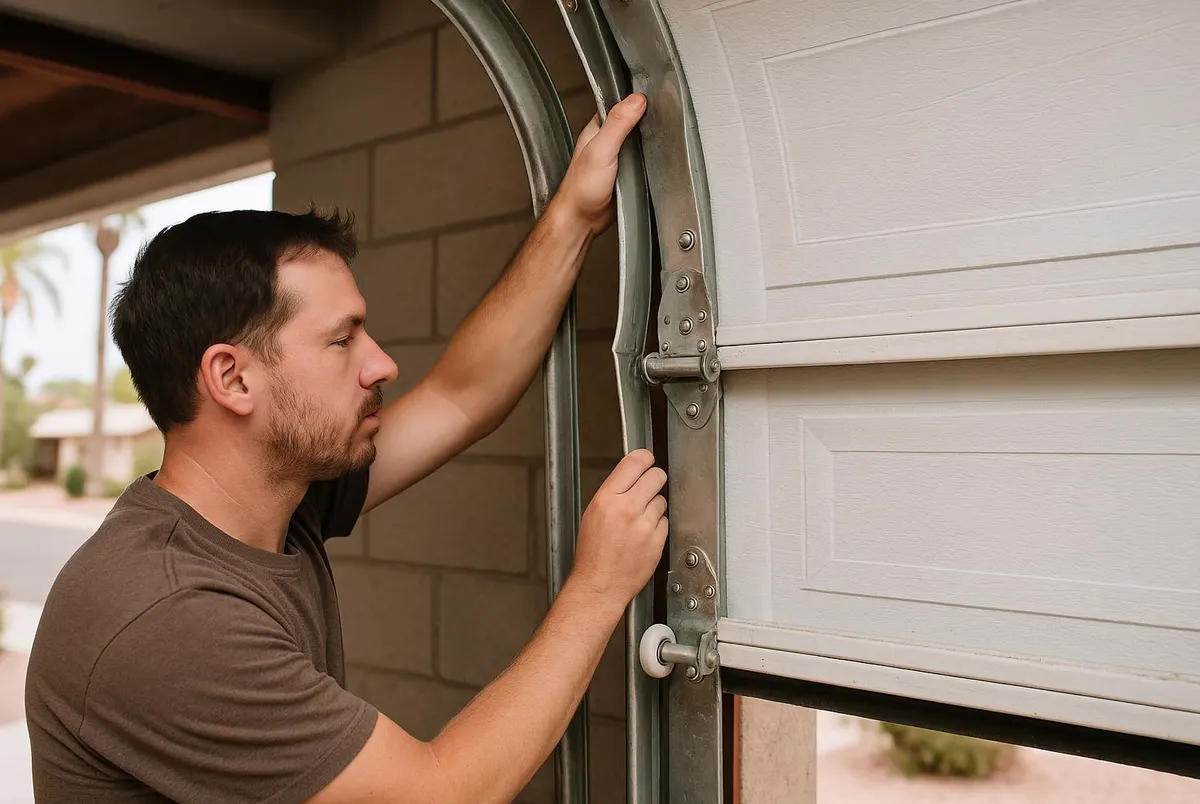
Before any weatherstripping goes on, walk the door and look for the damage that humidity and salt-tinged air leave behind:
- Tracks and rollers — look for orange rust spots or a rough, gritty feel when you run a hand along the rail.
- Hinges and bottom brackets — these sit low and catch the most splashback from afternoon downpours.
- Wood or wood-composite doors — check for swelling along the bottom edge or panel seams that won't close flush anymore.
- Bottom seal — a flattened, cracked, or torn seal has probably been letting water in all season, and it won't magically dry out on its own.
Clean and dry any rust spots, treat them, and let the door fully dry out before you add new seals or insulation. That order matters more than the products you buy.
Then Weatherstrip for the Right Reason
A new bottom seal and tight side weatherstripping are worth doing here — just not to keep out cold. They're there to stop wind-driven rain from getting up under the door during the storms that still roll through this time of year, and to keep humid air from pooling inside the garage overnight. Replace the bottom seal if it's flattened or cracked, and check that the side and top seals aren't gapping where the door meets the frame.
Hurricane Season Isn't Quite Over
It's easy to forget this once the weather starts to feel like fall, but hurricane season officially runs into late November, which means your garage door can still be dealing with wind-load stress even as temperatures drop. If you haven't checked the door's hardware — struts, track fasteners, the opener's attachment to the header — since the last storm, this transition window is a good time to do it before you move fully into cooler-weather maintenance.
Cold Snaps Can Expose Problems That Were Already There
A sharp overnight temperature drop will make a torsion spring feel tighter and a door sound louder than usual — more pop, more groan when it opens. That's often not a sign the cold is damaging anything; it's cold air meeting hardware that was already a little dry, a little rusty, or slightly out of balance. If a door that's always opened smoothly suddenly feels heavier or jerks partway through its cycle after a cold morning, treat it as a warning sign worth checking, not just a quirk of the season.
This is also a good time to relubricate rollers, hinges, and the torsion spring itself with a garage-door-specific lubricant. Humidity through the warmer months tends to wash out or gum up whatever was applied last, and going into cooler, drier weather with dry hardware is how you end up with squeaks and extra strain on the opener.
Watch the Clutter as the Garage Fills Up
Once holiday decorations, extra folding chairs, and gift boxes start stacking up along the walls, it's common for something to end up too close to the photo-eye sensors near the bottom of the track. If the door starts reversing for no clear reason, check that first before assuming it's a mechanical issue.
When to Call Orange Park Garage Door
If you're finding rust on the tracks, hearing new noises on cold mornings, or noticing the door isn't balanced the way it used to be, that's worth a proper look rather than a guess. Our Garage Door Tune-Up & Maintenance visit covers lubrication, hardware inspection, and balance checks in one trip, and if a spring has already started showing wear from a season of humidity and heat, our Garage Door Spring Repair service handles that before it turns into a door that won't open at all.
If your garage door needs attention before the next cold snap or storm rolls through, call Orange Park Garage Door. We serve Orange Park, FL and the surrounding Clay County area, and we can usually get a technician out fast.